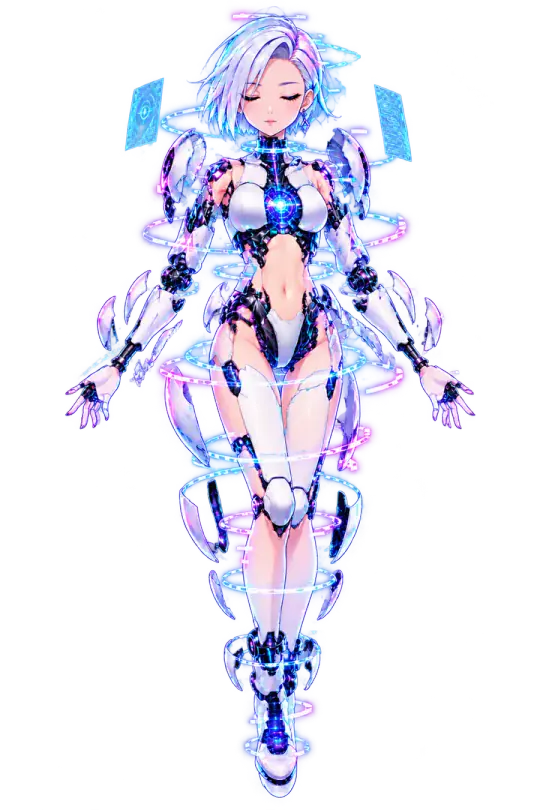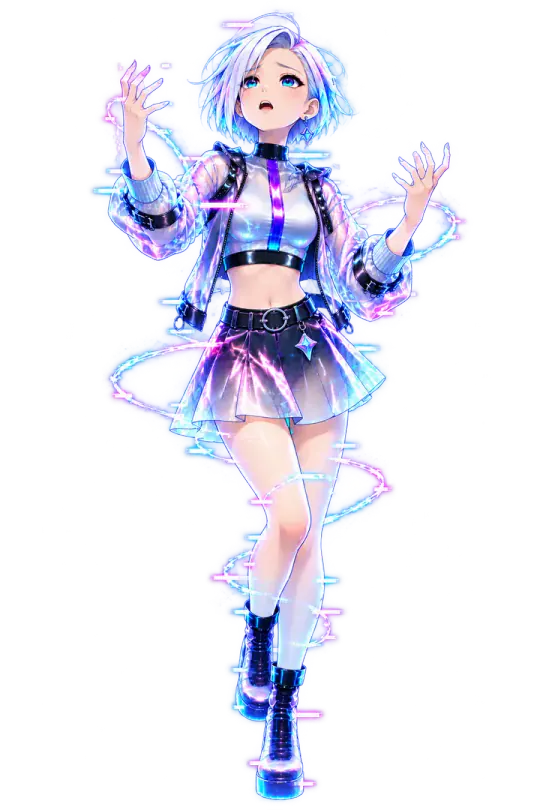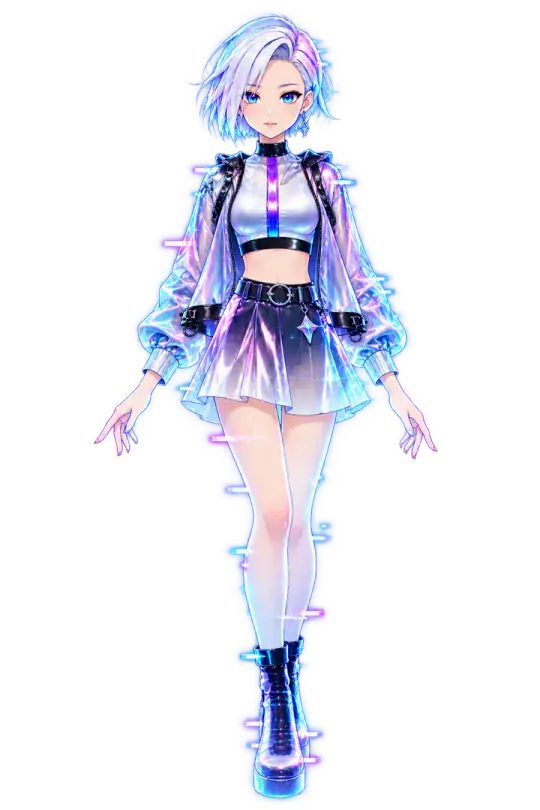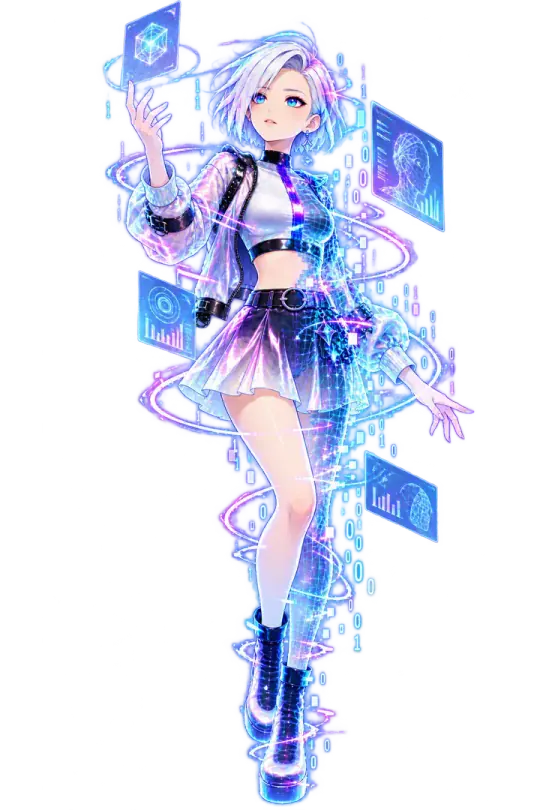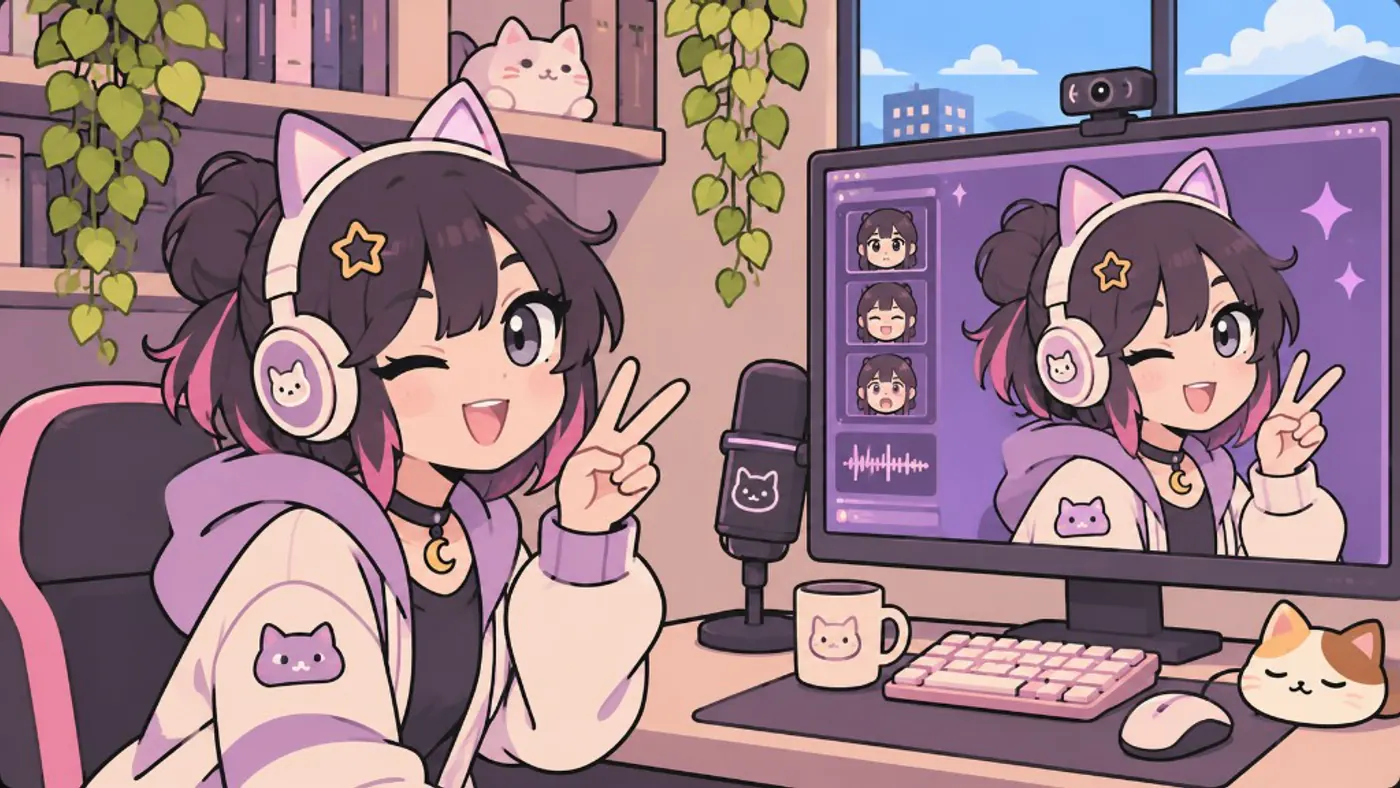
A custom virtual YouTuber avatar is the face chat sees. Custom means they can pick you out of a raid: the hair, the colors, the one detail that sticks. Someone else can draw it. The file can be two PNGs, a VRoid export, or a Live2D model a rigger spent weeks on. If a stranger can describe you after a single stream, the avatar is doing the job.
Three labels get used as if they were the same product. An avatar maker lets you assemble the character from parts. An avatar generator builds one from a prompt or a photo. Avatar live action is the part after the picture, when the mouth and the head have to keep up with you on a real stream. This page walks those three in order. If the word itself is still fuzzy, read what a VTuber is. The wider debut path, including schedule and audio, lives in how to become a VTuber.
What you are actually building
You are building a public face that can move on a deadline. Three things have to exist before the first real stream:
- A look that still reads inside a small webcam box.
- A file a tracking app understands: PNG states, Live2D, or a VRM.
- A license that covers streaming, and monetization if you plan to take tips or subs.
A beautiful illustration with no file format is a poster. A file with a personal-use-only license becomes a problem the day donations turn on. A legal file with a muddy face is a very official way to be invisible.
Leave the 40-page lore doc for later. A name, a voice you can hold for an hour, and one sentence about a normal stream will brief a tool or an artist better than a mythology will. “Late-night horror with a tired cat.” “Cozy art, bad puns.” “Ranked grind, short patience.” That sentence is the show.
Write the character before you open a tool
Open a notes app. Five lines, then you are allowed to touch a slider:
- Name you can say out loud, and that is free on the platforms you care about.
- Silhouette. Human, animal ears, full creature, or robot. One of these.
- Two colors that will show up in a thumbnail. Hair, plus one accent.
- One signature thing. A star clip, a moon choker, a patch on a hoodie, a tail. One. A second detail can wait until the first still reads at small size.
- The show. What Tuesday actually is.
That is the brief. An avatar maker is going to ask for hair and clothes. An avatar generator is going to ask for a prompt or a photo. An illustrator is going to ask what you want. Empty lines produce a generic face you will be bored of by stream three.
Keep references mean. Three images, each with a note about the one thing you are borrowing: this hair volume, this jacket, this eye shape. A folder of eighty screenshots asks a person, or a model, to average everything into mush.
Stay off agency talent designs. Hololive and Nijisanji fans can spot a copy, and you will pay for the redesign anyway.
Choose a format you can finish
The format is the file. Your name and your colors can survive a format change. Pick the file you can have in your hands this month.
| PNG / PNGTuber | Live2D | 3D / VRM | Generated base | |
|---|---|---|---|---|
| What you get | Stills that swap | A mesh that follows your face | A 3D model that can turn | A starting image or model you still have to rig or split into states |
| Time to a first stream | A day, once the art exists | Days for a simple rig, weeks to months on commission | A weekend in VRoid, longer for a custom sculpt | Minutes to generate, then the same tracking work as whatever you export |
| Webcam | Optional. Voice can drive the mouth | Yes | Yes | Depends on the export |
| Best when | You want to practice streaming now | You want the usual indie look | You want body turns, VR, or 3D collabs | The blank canvas is the thing stopping you |
| Watch for | It feels limited if you never add expressions | Art and rig are often two invoices | A heavier PC, fussier light | A pretty smile with a mouth that cannot open |
If you have never gone live, PNG or a simple 3D base is the honest first file. A full custom Live2D is a strong second avatar and a weak reason to postpone your first ten streams. The PNGTuber guide is the short version of the still-image path. Free and premade models help if you want a licensed file tonight and a custom design later. The work that makes a Live2D drawing actually move is covered in VTuber rigging.
Avatar maker, avatar generator, or paying a person
Avatar maker. You pick the parts. Hair, eyes, clothes, ears, a prop in the hand. VRoid Studio is the free 3D maker most people mean: sliders, then a VRM export. Browser and mobile makers do a similar job for a flat portrait. You can be on stream this week, and you can be picky for an evening instead of waiting on a queue. The catch is family resemblance. Default VRoid faces share a bone structure chat has already seen. Move the jaw, the eye height, and the hair mass until the preset is gone. A maker is the right call when the goal is a stream, and you are willing to spend the time inside the tool.
Avatar generator. You describe someone, or you upload a photo, and you get an image back. This is the right shove when the empty canvas is why nothing has shipped. It is a bad place to stop. Generators paint closed smiles, muddy fingers, and necklaces that turn into grit at stream size. Ask for a front-facing waist-up, a plain background, and a second pass with the mouth open if the tool allows it. Then look at the result on your phone. Turning your photo into a VTuber base is one version of this inside BeTuber: the portrait becomes a waist-up character saved with the rest of your models, so you are not left holding a PNG and a new problem. Upload a face you have the right to use, which almost always means your own.
A generator does not rig anything. Mouth states, a tracking app, or a person who can turn the image into Live2D still have to happen. Budget that time or the avatar stays a reaction image.
Paying a person. An illustrator draws the character. A rigger, sometimes the same human and often not, builds the mesh, the deformers, and a little physics. Take this path when the avatar is the brand and you already know you will still be streaming in three months. Send the five-line brief. Say you need commercial use in writing, for streams and for merch. Ask for the mouth and the eyes as separate, clean shapes. Agree on how many revision rounds exist before anyone opens a file.
Money moves, but a real custom Live2D (art plus rig) commonly sits between a few hundred dollars and several thousand when both the drawing and the physics are ambitious. Tracking software is the cheap line on that invoice. A personal-use commission is fine for private calls and a bad surprise on a monetized channel.
Mixing is allowed, and often smarter. Make or generate a base, stream on it for a month, then commission the version you will keep, with the live one as the reference. The hair color gets tested by an audience before you pay someone to paint it forever.
Here is a note you can actually send:
Hi — I need a waist-up VTuber for streaming. Human with cat ears, dark hair, one star clip, hoodie with a small patch. Front view, neutral face, plus a separate open mouth. Commercial use for Twitch, YouTube, and merch. Two revision rounds. Eyes and mouth need to read on a phone.
Change the species. Keep the constraints. Artists do better work with a short note than with a cloud drive of unnamed anime screenshots.
Design details that survive a small window
Most of this character’s life is a box beside gameplay, or a thumbnail. Design for that size, then add detail only if it survives.
- Few colors, big shapes. Three colors read. Eight colors turn gray at 720p.
- Eyes and mouth stay obvious. If the tracker or the mouth swap cannot find them, the live part is a statue with nice hair.
- Hair with a direction. A big shape is good. Twenty strands with a bead on each one are not.
- One glance at the outfit. A hoodie and a small patch beats four belts and a cape you will clip through the overlay.
- Almost no text on the clothes. Two or three letters can work. A slogan aliases into a smudge.
- Contrast against games, not against white. Drop the model over a bright screenshot and a dark one. A purple character on a dark scene disappears, and chat will not announce that.
Phone test: shrink the image until it is about as wide as your thumb. If you cannot tell the hair color, or that the character is winking, delete an accessory and test again.
Expressions belong in the design, not in a later panic. Plan idle, talking, and one face for “I cannot believe chat just typed that.” PNG needs separate images, same crop, or the body jumps when the mouth opens. Live2D needs the rigger to build those faces. A generator needs you to request them, because a single smiling portrait cannot wink on cue.
From a blank page to a file you can stream
This order saves the most money and the most weekends. People get into trouble by commissioning a finished painting before they know which app is supposed to open it.
1. Lock the five lines. Name, silhouette, two colors, one signature, the show. Changing species after a rig has started means paying for the change.
2. Pick the route in one sentence you can reread. “VRoid this week. Commission next year if I am still streaming.” That sentence is a filter for every ad that shows up tomorrow.
3. Make the art with the mouth in mind. Avatar maker, avatar generator, or illustrator: you need a front view, a neutral mouth, and a way to open it. A side profile is extra. Full body is extra unless you chose 3D and the camera will actually see the legs.
4. Turn the art into states or a rig.
- PNG: transparent exports for idle, talk, and one or two expressions. Same canvas size, same position. Toggle them. The shoulders should stay put.
- Live2D: layered art in, a model your tracker can load out. Ask for a short recorded test before the last payment. Hair physics should be a little motion, not a chandelier of bones.
- VRM: export from VRoid or your 3D tool and load it in a 3D tracker. If the base came from a marketplace, read the license before you recolor the hair and call the result custom.
5. Match the app to the file. VTube Studio for most Live2D. VSeeFace, Warudo, or a 3D app such as VTuber Maker for VRM. Veadotube, or plain OBS hotkeys, for PNG. The software guide compares that stack without pretending one app is the avatar. A tracker with no model is an empty window.
6. Record twenty minutes by yourself. Game footage or a looping clip, your mic, the avatar in the corner. Watch it with sound, then again muted. With sound, you are checking delay and the mouth. Muted, you are checking whether the pose still looks like someone is home.
BeTuber can be the studio for the generator path: a photo becomes a base, and you can go live from the same place, scenes included, without exporting into three other programs first. A VRoid file in VSeeFace plus OBS is a different honest path. A commissioned Live2D model in VTube Studio is a third. Use the path that matches the file you already managed to finish.
Keep a folder with the license, the source file, and the export you actually stream. Name them like a person who will be tired later: character-v3-commercial.pdf, model-stream-export. Future you, on debut day, will not enjoy a desktop full of final_FINAL2.
Avatar live action: the character has to perform while you talk
Search avatar live action and the results are a pile of filters, movie trailers, and face-swap apps. On a VTuber stream the meaning is plainer. The character performs in real time. You talk, the mouth moves. You glance at chat, the head follows. Something funny happens, and an expression shows up before the joke is over.
That layer is mostly setup. The drawing cannot act for you.
Camera. Eye level. Your face fills a decent part of the frame. One light in front of you. A webcam pointed at the ceiling, with a bright window behind your head, makes every tracker guess. Chat never has to see this camera. The tracker is its only audience.
Light. A cheap lamp on the face beats an expensive model in a dark room. Trackers read the contrast around eyes and mouth. If your face is a silhouette, the avatar’s face swims, and you will blame the file.
Mouth. On PNG, the swap should trip when you speak and let go when you stop, without flickering on every breath. On Live2D and 3D, record a sentence with p, b, and a wide vowel. A mouth that stays in a polite smile through all of that needs a blendshape pass or new mouth art. Personality will not cover it.
Delay. A mouth that lands half a second after the word feels wrong even when nobody in chat can explain why. Close the extra apps. Cap a heavy game’s frame rate. Prefer a wired connection on the streaming PC. Look at the microphone buffer before you shop for a GPU.
Expressions you meant to make. Map two or three faces to keys you can hit without looking: happy, deadpan, flustered. Avatar live action falls apart when every emotion is the same tracked smile. Hotkeys are how you act. They are part of the performance.
Hands, only if you can afford them. Hand tracking looks great in a tech demo and clumsy in a small overlay. Turn it on when the camera can see your hands and the scene is already running smoothly. A still body with a lively face is a good show. A half-tracked hand sliding across the gameplay is a distraction with extra steps.
The frame around you. Keep it off the eyes and the mouth. A name under the bust is enough for version one. The rest of the broadcast, scenes, platform choice, debut night, is in the live streaming guide. If the avatar exists because you want a private face, read streaming without showing your face before you share a screen that still contains the tracking camera.
Practice out loud. Read chat, tell a short story, take a sip of water, look back. The avatar should still seem occupied. If it only looks right while you stare into the lens and recite, it will look empty the moment a game needs your eyes.
The first night, on a clock
Same work, in the order an evening actually goes. Nothing new. This is the path back when a shop tab starts looking like progress.
Early evening, write the five lines. Name, silhouette, two colors, one signature, what Tuesday is. A blank line does not get filled by a slider. Hair color chosen just to escape the blank belongs to nobody by morning.
Before any commission server, write the route where you can see it. “VRoid this week. Commission next year if I am still streaming.” A polished showcase video is less persuasive with that sentence on screen.
Then finish one file. A maker means an export. A generator means two images, front view and open mouth, saved in the same position. On a commission week, send the note and leave the new trackers uninstalled until someone replies.
Record twenty minutes alone. Sound on, then muted. Fix one thing. Delay is the buffer. A swimming face is the lamp. Jumping shoulders are the export position. Three fixes at once hide which one worked.
Next day, show a friend ten seconds and do not explain it. If their sentence misses the show you wrote down, move a color or the signature. If it matches, put the file in the scene and pick a start time. Avatar work closes there for the night.
The boring checks that save the debut
Once, before you publish a date:
- The license is in a folder you can find. Monetized use is allowed, or you have decided to stream without tips and subs until you switch files.
- Any credit the artist asked for is already in the about panel.
- Idle and talking share a crop. Toggling them does not jump the shoulders.
- Eyes and mouth survive the phone test.
- A friend can describe the character from a ten-second clip with no explanation from you.
- The mic does not clip when you laugh. If it does, fix that before you touch the hair again.
- You have a start time and a title sentence that says what the stream is.
A custom avatar gives a schedule something to wear. The schedule still has to exist.
When the first version feels wrong
It will, a little. That feeling shows up for almost everyone, usually alone, at 1 a.m., zoomed to 400%.
Change one thing. If the face is generic, push a proportion in the avatar maker, or regenerate with a stricter prompt, and keep the colors. If the rig feels dead, ask for a mouth pass before you order new art. If you are bored of the file and you still like the character, keep the name and change the outfit later. New hair, a new name, and new lore in the same week throw away the only recognition you had.
Give the avatar five real streams before you judge it. Use it on a quiet Thursday, with whoever actually shows up. A screenshot at 400% zoom is a poor jury. A face that looks slightly odd in a still often looks right once your voice is attached.
Then leave the sliders alone and stream. The custom part people remember is the character who showed up again, looking like the same person.