
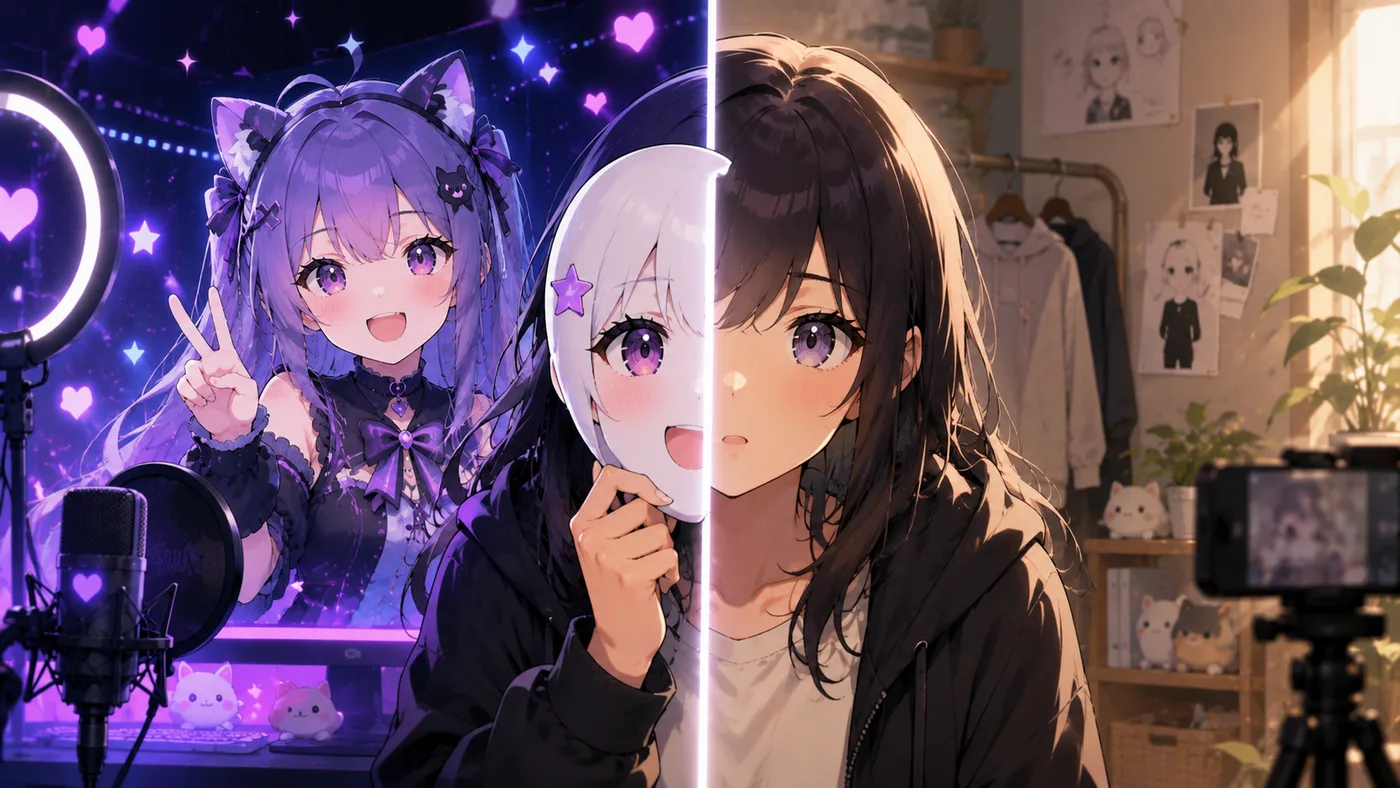
A VTuber face reveal is the moment a Virtual YouTuber who normally performs as an animated avatar shows their real human face on camera. It might be a deliberate livestream event, a quiet photo post, a partial reveal (hands, silhouette, voice-only IRL), or the start of a new chapter where the person streams without the model.
Face reveals are one of the most searched topics in VTuber culture because they sit at the intersection of parasocial curiosity, privacy, and brand. This guide explains what they are, why creators choose them—or refuse them—how agencies factor in, and what healthy fandom looks like when the avatar is no longer the only public face.
What counts as a VTuber face reveal
Not every break from the avatar is a full reveal. Fans and press use the phrase loosely:
| Type | What the audience sees | Common context |
|---|---|---|
| Full face reveal | Clear, identifiable human face on stream or video | Milestone streams, retirement, IRL pivot |
| Partial reveal | Hands, lower face, back of head, or heavily filtered glimpse | Collabs, “getting ready” content, trust-building |
| Voice + real cam | No avatar, but face hidden (hood, mask, blur) | Transition period, safety compromise |
| Accidental / leaked | Real identity spread without consent | Doxxing—not a “reveal” the creator chose |
| Post-VTuber IRL | Former talent streams as themselves | Graduation, contract end, indie pivot |
The ethical line is consent. A chosen reveal is a creative and personal decision. A leak is harassment. BeTuber covers the former; we do not catalog doxx methods or “who is behind the avatar” guessing games.
Why VTubers stream behind avatars in the first place
VTubing is not only an aesthetic choice. Performers adopt avatars to:
- Keep home, family, and day jobs off-camera
- Separate public character from private self
- Reduce harassment and stalking risk tied to a real face
- Play with lore, species, and design facecam cannot match
- Recover from camera anxiety or past streaming burnout
A face reveal reverses some of those boundaries on purpose. That is why it feels dramatic: the audience is not just meeting a person—they are meeting someone who built a different public self first.
Why creators choose a face reveal
Reasons vary by career stage, platform, and agency vs indie status:
Career expansion
Music debuts, convention panels, documentary-style vlogs, and sponsor integrations sometimes push creators toward IRL footage. A face reveal can signal “this is still me” when the avatar would feel disjointed next to a real-world video.
Trust and sponsorship
Some brands want a human face for campaign assets even when the talent is known as a VTuber. Indies may reveal selectively for a deal; agency talents often route those requests through corporate policy instead of a public unmasking.
Character retirement or graduation
When a talent graduates from an agency, retires a persona, or rebrands, a reveal can bookend the avatar era. Fans treat it as closure—not a bait-and-switch.
Long tenure and personal comfort
After years of separation, a creator may feel safe enough to show their face to a core community. The reveal is framed as their timeline, not a fan demand fulfilled.
Platform or collab logistics
IRL collabs, travel streams, and certain tournament broadcasts are awkward with only a Live2D head on screen. Partial reveals or “off-model” streams solve production without fully abandoning the character.
Why many VTubers never reveal
Staying avatar-only is a successful end state, not a missing step:
- Privacy remains the default reason—especially for women and LGBTQ+ creators facing elevated harassment
- Character IP is the product; the face is irrelevant to merch, lore, and clips
- Agency contracts and brand guidelines often expect in-character presentation
- Audience preference: subsets of fans explicitly want the fantasy unbroken
- Safety: once a face is public, it cannot be unpublished
If you are learning how to become a VTuber, decide your boundary before debut. You do not owe chat a reveal schedule.
Agency VTubers vs indie face reveals
| Factor | Typical agency talent | Typical indie |
|---|---|---|
| Face reveal frequency | Rare; corporate image control | More common if the creator chooses |
| Graduation reveals | Sometimes discussed in farewell context | N/A—no graduation |
| Sponsor face requests | Handled by management | Creator negotiates alone |
| Fan pressure | Often shielded by policy; still happens | Direct in chat and DMs |
Hololive, Nijisanji, and similar companies built global brands around consistent avatars. A spontaneous face reveal would collide with merchandise, lore, and multi-talent marketing. Indies trade that machine for full control—including the option to stay 2D forever.
Fan reactions: hype, backlash, and the parasocial reset
Face reveal moments drive spikes in clips, searches, and sub counts—but reactions are mixed:
- Curiosity traffic floods in for a week; retention depends on what content comes after the reveal
- Parasocial reset: some viewers feel “the magic is gone”; others feel closer to the creator
- Harassment spikes: real-face exposure can attract doxxing, appearance critique, and boundary violations
- Meme culture treats reveals as epochal events even when the talent still streams as the avatar afterward
Healthy fans celebrate if and when the creator chooses. They do not treat refusal as secrecy to punish.
Face reveals and adult platforms
On opt-in adult platforms, creators decide how much real skin or face to show. Our VTuber Fansly and VTuber OnlyFans guides stress the same rule: face reveals are optional, model licenses must allow the use case, and staying in-character is valid. A face reveal for a spicier page is a business choice—not a fandom entitlement on the main channel.
What fans should and should not do
Do:
- Watch the streams and posts the talent actually publishes
- Respect “I will not reveal” as a final answer
- Report doxxing and leaked identity material on platform
- Enjoy the character as designed—see the VTuber models directory for official personas
Do not:
- Spam “face reveal when?” in chat
- Compile “evidence” from reflections, con sightings, or old personal accounts
- Share leaked photos “for the lore”
- Conflate VTubing with hiding something shameful—it is a performance format
For broader culture terms, see the VTuber term wiki and VTuber Wikipedia glossary.
Partial reveals and “reverse” reveals
Some creators debut face-forward, then adopt a VTuber avatar later—the opposite trajectory. Others show a real face once, then return fully to the model. The through-line is intention: the performer controls which identity is live for which project.
PNG and Live2D talents might show hands or a desk setup without ever showing eyes and nose. That is not “half a reveal” to complete—it is a boundary.
Bottom line
A VTuber face reveal is when a Virtual YouTuber shows their real face after building an audience behind an avatar. It can expand a career, close a chapter, or satisfy personal comfort—or it may never happen at all. The format does not require unmasking; consent and safety do require that fans stop treating the avatar as a puzzle to solve.
Support VTubing by engaging with the art, streams, and merch creators choose to share—not by demanding the person behind the model.